Denver: 720-545-9643
More Info
Since 2009, Team Dave Logan has helped millions of Colorado homeowners connect with background-checked, local contractors—no personal data required.
Find a Deck ContractorAlthough we hold our companies to a high standard, you are encouraged to do your own due diligence before hiring one of our pros to work with you, as everyone’s needs and requirements are different.
Services | Decks

Add your zip code to find Team Dave Logan contractors that serve your area.

Select a subcategory to further refine your results and find specific services.




“Team Dave Logan is my go-to for finding contractors of all types. They do a through check of all companies including insurance, giving me confidence that people they recommend are capable and upstanding. I've also received discounts from contractors on the order of $500-$1,000 for using Team Dave Logan, and they have all provided excellent service.”
“Team Dave Logan is the gold standard when it comes to connecting homeowners with reputable, trustworthy professionals. Their vetting process is thorough, and it really shows—every company we’ve worked with through their network has been top-notch. It's clear they truly care about quality and integrity. Whether you're a homeowner looking for reliable help or a contractor looking to align with a reputable brand, Team Dave Logan delivers. Highly recommend!”
“Very pleased with my experience with Team Dave Logan. They have proven to be a valuable resource to choose in confidence in a very scary industry. Highly recommend!”
Our Deck Contractor Pros offer the following services:
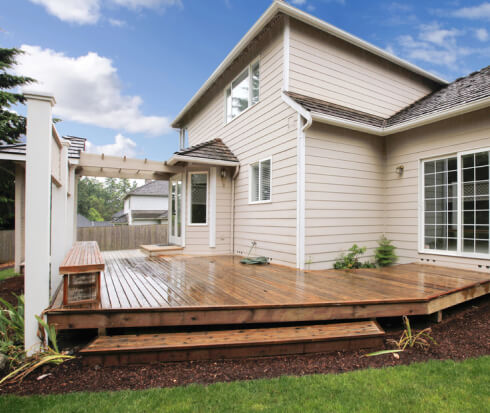
Team Dave Logan helps Denver homeowners find screened deck companies for deck installation, repair, resurfacing, covers, railings, and outdoor living upgrades. Decks in Denver homes have to deal with strong sun, fast snowmelt, dry air, tight city lots, permit rules, and real day to day use, so choosing the right deck builder matters from the first site visit.Many homeowners come here to compare Denver deck builders before calling around, asking for bids, or deciding between repair and replacement. We make that first step easier by connecting you with local deck professionals who have already gone through a screening process.
A deck can look simple on paper, but every outdoor space has its own quirks once a deck installer walks through the yard. Slope, stairs, railings, shade, drainage, HOA rules, and alley access can all shape the project.
Here are the deck services homeowners across greater Denver compare when planning a repair, a custom deck, or a larger outdoor project.
Deck installation starts with the outdoor space and how the new deck will fit into daily life. Is the yard flat? Does water drain toward the house? Will materials fit through a narrow side yard in Platt Park, or does the crew need alley access in Highlands or Sunnyside? These small details can change the plan.
Material choice matters too. Wood gives a warm, classic look, but Denver sun can dry and fade it. Composite decking costs more up front, but many homeowners like the lower upkeep.
A ground level deck or concrete patio upgrade may stay fairly simple, while a raised deck, rooftop layout, patio cover, pergola, outdoor kitchens, and railings bring more planning. In Denver, deck height can also affect permit needs, especially once the structure gets higher off the ground.
The deck contractors listed here offer a mix of repair and maintenance services for both residential and commercial properties. Some decks only need targeted fixes, while others require consistent upkeep to stay safe and usable. The services below reflect what most contractors handle when dealing with wear, damage, and ongoing exposure to Denver’s conditions.
Deck repair services may include replacing cracked or splintered boards, securing loose railings, reinforcing stairs, repairing sections affected by rot, or replacing rusted connectors and fasteners. In some cases, contractors may need to remove and rebuild small sections where the structure has weakened, especially around stairs, ledger boards, or high-traffic areas. We have seen decks that looked solid from the lawn, then felt soft or unstable underfoot near entry points. That kind of issue points to deeper structural wear that needs attention before it spreads.
Contractors begin by cleaning the deck surface to remove dirt and any old coatings. From there, they sand down areas where the finish has worn off or the wood feels rough. Along the way, they check railings, stairs, and fasteners, tightening anything that feels loose. If they spot early signs of wear like crack or loose boards, they take care of those before they turn into bigger problems. This is what deck maintenance services may involve when keeping a structure stable and easier to maintain over time.
Residential deck builders focus on homes, backyards, rooftop decks, and outdoor living spaces. Commercial deck builders handle larger shared spaces such as restaurants, apartment buildings, offices, and properties with heavier use.
The difference goes beyond size.
A repair makes sense when the issue is limited, like one loose railing, a few cracked boards, or a small section of worn decking. Replacement starts to make more sense when the damage has moved into the structure. We have seen older decks where the top boards looked tired, but the real problem was underneath, soft joists, cracked beams, weak posts, and moisture trapped where no one checks.
Here are signs your deck may be ready for replacement:
A deck is more than just a structure attached to your home. It becomes part of how you use your space every day. It can be where you step out in the morning, sit in the evening, or spend time with family. An outdoor extension adds usable space without changing the footprint of your home.
Keeping a deck in good condition, through repair or full replacement, helps you hold onto that space and keep it working the way you need it. It also gives you extra room without taking on a full interior expansion, which can be more expensive and disruptive. A well-planned outdoor extension can handle seating, outdoor cooking, or just a place to unwind, making it feel like a natural extension of your home rather than an add-on.
Denver is not gentle on outdoor materials. The mile-high sun can fade wood fast, dry air pulls moisture out of boards, and snow can melt during the day before freezing again at night.
That is why material choice and maintenance matter in Denver. A deck near Sloan’s Lake will take on more direct sun exposure throughout the day. Boards can dry out faster, fade unevenly, and start to crack or splinter if they are not sealed regularly. Finishes also wear down quicker in these spots, so they need to be reapplied more often.
A shaded deck in Park Hill faces a different set of issues. Less sun means moisture tends to sit longer, especially after rain or snow. That can lead to surface buildup, soft spots, or early signs of rot if it is not cleaned and sealed properly. These decks may look fine at first glance but can hold hidden moisture underneath.
A few local details worth planning for:
Searching for “deck building companies near me” feels personal for a reason. This is work that happens right outside your door. The crew moves through your yard, around your entry points, and works near the spaces you use every day. It can involve pets, kids, tight access points, or small details like gates, landscaping, and how everything connects back to the house.
Because of that, the decision is not just about finding someone who can build a deck. It is about finding a crew you trust to work around your home without turning it into a disruption.
Team Dave Logan gives Denver homeowners a clearer place to start by connecting them with screened local decking installation companies, so you are not sorting through unknown options on your own. Here are a few reasons homeowners use Team Dave Logan:
A quality deck should feel like part of the home, not an add on that fights the yard, and the right builder can help move the idea closer to your dream deck or perfect outdoor living space. Team Dave Logan helps you find screened Denver deck companies that know the local details and can help you build, repair, or update the space with more confidence.
A small, simple deck can come together in just a couple of weeks, while multilevel or custom decks can take six months or more from the initial design phase through final construction. The process involves several stages, each with its own timeline. Hiring a contractor (up to 10 weeks depending on availability and season), obtaining permits (1 day to 4 weeks), framing and foundation work (2 days to 4 months), installing decking boards (1–2 weeks), and adding finishing touches like railings, stairs, and lighting (1 day to 4 weeks).
For a new pressure treated deck, the real answer is, “when the wood is ready.” Some boards dry fast in the sun, others take longer after wet weather or shaded conditions. Drop water on a few areas. If it soaks in, staining may work; if it beads, give it more time. Clear sealers may need attention around the two year mark, while semi transparent stains can stretch a bit longer on protected decks.
Start with the parts people touch and step on, boards, stairs, railings, and fasteners. If anything moves, cracks, rusts, or feels soft, do not brush it off. Then look underneath. Rot along joists, small cracks across beams, white mold, or post bases sitting directly on concrete can point to problems that are easy to miss from above.
Deck materials today go beyond just wood. Most builders work with a mix of natural wood, engineered materials, and metal systems, each suited for different budgets, maintenance levels, and long-term use. Here are the most common decking materials used today:
Wood Decking (Traditional Options)
Composite and Synthetic Decking (Low-Maintenance Options)
Metal and Structural Systems (Specialty Use)
Modified and Engineered Wood (Hybrid Options)
Each material comes with trade-offs. Some offer a natural look but require regular upkeep. Others reduce maintenance but change the appearance and feel. The right choice depends on how the deck will be used and how much time you want to spend maintaining it over the years.
A deck can show early warning signs before anything fails. Some of these are easy to feel when you walk on it, while others show up in the structure underneath. It helps to check both what you can see and how the deck behaves during normal use. Look for these signs:
Movement or instability
→ Sways, bounces, or feels uneven when you walk across it
Separation from the house
→ Starts pulling away where it connects to the home (ledger area)
Uneven sections
→ Parts of the deck dip, slope, or no longer sit level
Rot/discoloration
→ Darkened, cracked, or spongy areas
Loose or unstable railings and stairs
→ Railings shift when you lean on them or stairs feel unsteady underfoot
Failing fasteners or connectors
→ Rusted bolts, nails backing out, or metal brackets
Wear in high-risk areas
→ Damage near the base of posts, along board edges, or where water tends to sit
A simple screwdriver test can confirm what you’re seeing. Press the tip into areas that look worn. If the wood feels soft or breaks apart easily, the structure may no longer be sound. If any of these signs show up, it’s best to stop using the deck until it’s been inspected. What looks like a surface issue can point to deeper structural problems underneath.
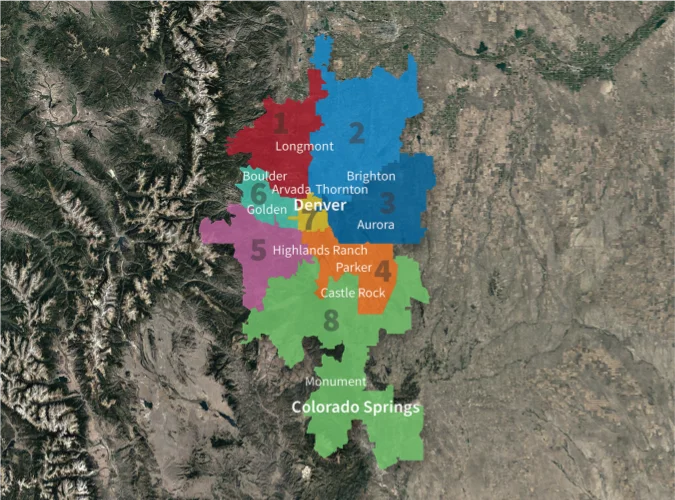
With a reach that extends from Longmont to Colorado Springs, our ability to connect homeowners with renovation and repair professionals is unrivaled.
We make it fast, easy, and free!