McIntire Roofing - Siding
Service Area: Denver Metro
Member Since 2024
Google Rating:BBB Accredited
Denver: 720-501-6998
More Info
Since 2009, Team Dave Logan has helped millions of Colorado homeowners connect with background-checked, local contractors—no personal data required.
Find a Siding ContractorTeam Dave Logan helps homeowners compare screened siding contractors in the Denver Metro Area for siding repair, siding replacement, and new siding installation. Local companies may also offer soffit and fascia work, exterior trim repair, and siding material options such as fiber cement, vinyl, metal, wood, and stone veneer.
Compare screened local siding contractors serving Denver Metro for repair, replacement, and installation.
Although we hold our companies to a high standard, you are encouraged to do your own due diligence before hiring one of our pros to work with you, as everyone’s needs and requirements are different.
Services | Siding

Add your zip code to find Team Dave Logan contractors that serve your area.

Select a subcategory to further refine your results and find specific services.








“Team Dave Logan is my go-to for finding contractors of all types. They do a through check of all companies including insurance, giving me confidence that people they recommend are capable and upstanding. I've also received discounts from contractors on the order of $500-$1,000 for using Team Dave Logan, and they have all provided excellent service.”
“Team Dave Logan is the gold standard when it comes to connecting homeowners with reputable, trustworthy professionals. Their vetting process is thorough, and it really shows—every company we’ve worked with through their network has been top-notch. It's clear they truly care about quality and integrity. Whether you're a homeowner looking for reliable help or a contractor looking to align with a reputable brand, Team Dave Logan delivers. Highly recommend!”
“Very pleased with my experience with Team Dave Logan. They have proven to be a valuable resource to choose in confidence in a very scary industry. Highly recommend!”
Our Siding Contractor Pros offer the following services:
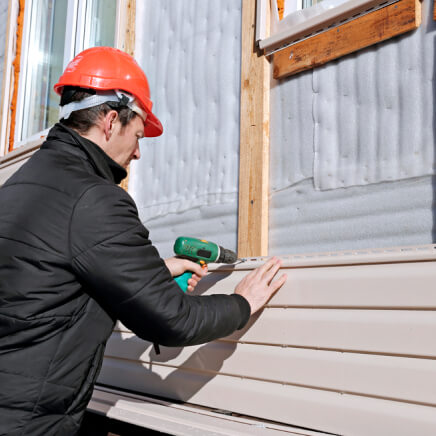
Finding the right siding contractor in Denver starts with more than checking who works closest to your ZIP code. Homes across Denver, Lakewood, Littleton, Arvada, Aurora, Westminster, and nearby communities deal with different levels of sun exposure, hail, wind, and winter weather, so local experience can matter when contractors recommend materials or repair strategies.
Team Dave Logan gives homeowners a place to compare screened siding contractors serving the Denver Metro Area. You can review individual companies, see the services they provide, and contact contractors that fit the scope of your project.

Siding work can range from replacing a few storm damaged panels to stripping an entire exterior down to the sheathing. Denver siding contractors may handle the siding itself along with the trim, flashing, soffit, fascia, and other details that complete the exterior system.
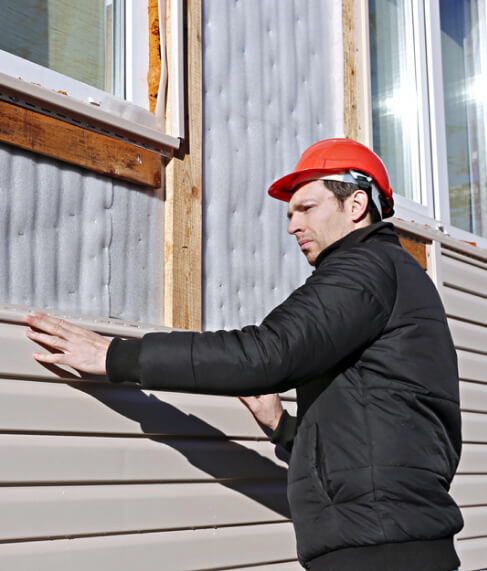
New siding installation involves more than fastening panels to a wall. Contractors prepare the exterior, install the required weather resistant barrier, lay out the siding correctly, and detail transitions around windows, doors, corners, utility penetrations, and rooflines. Those smaller transitions deserve attention. A wall can look perfectly straight from the street while poor flashing around one window creates a path for moisture behind the siding.
When damage is limited to a particular area of the house, repairs may make sense. Replacing broken panels, securing loose parts, fixing storm damage, resealing susceptible joints, and fixing trim surrounding the impacted area are all possible tasks for contractors.
Matching can become the difficult part on older homes. Even when the damage is small, a discontinued profile, faded color, or unavailable texture may make a clean repair harder than homeowners expect.
Siding replacement starts by removing the existing material, which gives the contractor a look at what has been hidden for years. That is where the scope can change. Soft sheathing, old water staining, failed flashing, damaged trim, or an outdated weather barrier may not show from the outside. A professional can identify those conditions before covering the wall with new siding.
Siding is connected to windows, doors, corners, roof edges, and other external openings by soffit, fascia, and trim. Damage in these places may reveal openings that let air, water, or pests enter certain regions of the wall or roof assembly.
Rather than treating the wall panels as a separate system, it makes logical for the contractor to check these features simultaneously during larger siding projects.
Vinyl, fiber cement, engineered wood, metal, natural wood, and brick accents are all used in Denver homes. Durability, upkeep, exposure, architecture, and repairability should all be discussed because there isn't a single material that works for every property.
Here is a quick comparison before looking at each option more closely:
| Siding Material | Main Advantages | Denver Considerations | Maintenance |
|---|---|---|---|
| Fiber cement | Durable, fire resistant, stable appearance | Strong sun and hail exposure still matter | Moderate |
| Vinyl | Lower maintenance, broad color selection | Cold and impact can affect some products | Low |
| Insulated vinyl | Added insulation behind the panel | Installation details affect performance | Low |
| Engineered wood | Wood appearance with more consistency | Moisture detailing remains important | Moderate |
| Metal | Long service life, fire resistance | Hail can leave visible dents | Low |
| Natural wood | Distinctive appearance | UV, moisture, paint, and staining require attention | Higher |
| Stone veneer | Strong visual accent | Proper drainage and flashing are critical | Low to Moderate |
Fiber cement gets attention in Denver for good reason. It handles sun, moisture, pests, and fire well, and brands like James Hardie give homeowners plenty of style options. The bigger thing to watch is installation, because poor flashing or spacing can undo a lot of those advantages.
Metal siding changes the look of a house fast. It works especially well on modern exteriors and can hold up for a long time with little maintenance. Hail is the obvious tradeoff in Denver, since dents can remain visible even when the panel itself is still doing its job.
For homeowners who want something straightforward and lower maintenance, vinyl siding is still a common choice. Insulated versions add foam behind the panel, which can help with support and thermal performance. In Colorado, though, cold snaps and hail are worth factoring into the decision.
Natural wood has more character than most manufactured siding, but Denver sun and moisture can be hard on it over time. Stone veneer fills a different role and is commonly used around entries, columns, and lower walls. With veneer, the hidden drainage and flashing details matter more than most homeowners realize.
Engineered wood is appealing when real wood looks right for the house but the maintenance feels like too much. It gives a warm, natural finish with more consistency from board to board. Good moisture detailing around cuts, windows, and trim is where the quality of the install really shows.
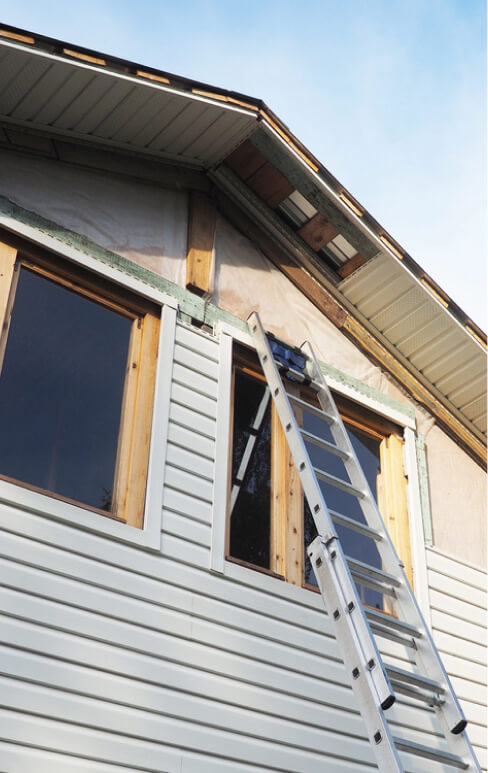
Siding can often be repaired when damage is localized and the surrounding material remains in good condition. Replacement becomes more practical when deterioration affects multiple walls, hidden moisture damage appears, or matching the existing siding is no longer realistic.
The answer becomes clearer once a professional inspects both the visible siding and the wall assembly behind the damaged area.
A siding repair may make sense when:
A siding replacement becomes more reasonable when:
A professional inspection can help separate cosmetic damage from a problem that reaches deeper into the wall.

The scope of a Denver siding project can change based on the home, material, access, and what contractors find once the existing siding comes off.
Common cost drivers include:
When comparing bids, check that each contractor includes the same scope. One proposal may cover tear off, disposal, flashing, trim, permits, and repairs that another leaves out. Getting multiple bids from screened contractors makes those differences easier to compare before hiring.
Siding work in Denver may involve city permits, landmark review, neighborhood design standards, or HOA approval. The requirements depend on the property and project.
Denver treats exterior wall coverings, soffit and fascia work, and blown in insulation within its roofing and siding permit category. Homes that are designated landmarks or sit within historic districts may also need Landmark Preservation approval before qualifying exterior work begins.
HOAs can set separate rules for siding materials, colors, profiles, and exterior changes. City approval does not replace HOA approval.
Some Denver areas, including Cherry Creek, Central Park, Capitol Hill and Uptown, Golden Triangle, Five Points, and Lower Downtown, also have additional design review standards or processes. A local siding contractor can help identify what applies to the property before materials are ordered.
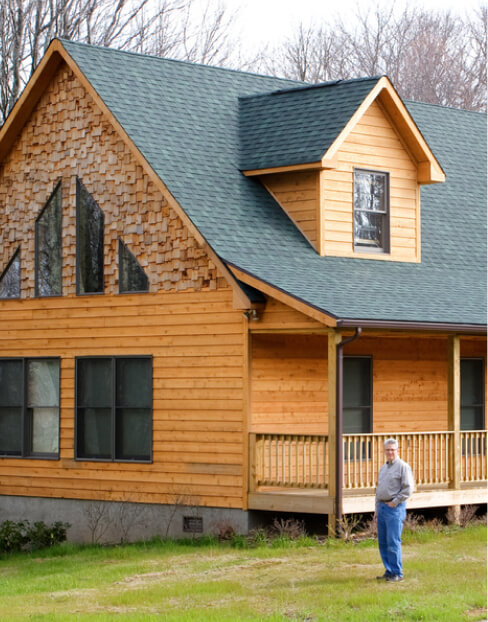
When homeowners search for "siding contractors near me" in Denver, many companies can look similar at first. The real differences show up in the scope, material experience, water management details, and how unexpected damage gets handled.
Look for:
Three useful questions are: What happens if damaged sheathing is found? Who handles flashing around windows and doors? Which parts of the scope could change once the old siding comes off?
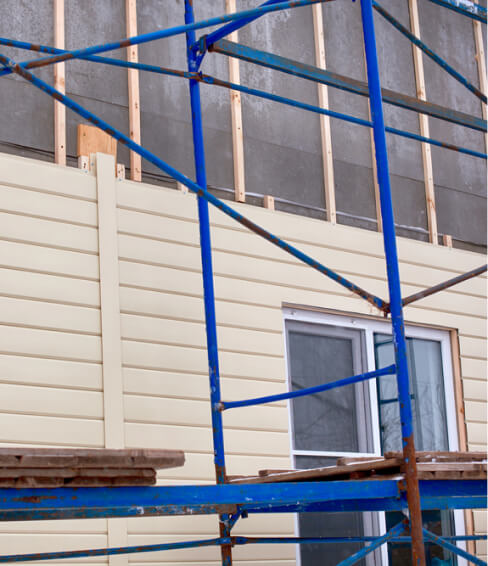
Team Dave Logan gives Denver homeowners a more focused way to compare local siding companies without starting from a blank search page. Instead of relying on one company profile or a single review source, homeowners can look across multiple screened contractors and narrow the list based on the project.
Homeowners also use Team Dave Logan because the directory offers:
The goal is not to make the hiring decision for the homeowner. Team Dave Logan gives people a stronger starting point, then encourages them to compare bids, ask questions, and complete their own due diligence.
A good siding estimate should clarify the condition of the exterior, the proposed work, and anything that could change once the project starts.
Explain what prompted the call, such as hail damage, loose panels, moisture concerns, or aging siding. Photos can help at first, but an in-person look gives the contractor a better read on the problem.
The contractor can check the siding, trim, flashing, openings, and other areas where damage may spread beyond what is visible from the ground.
Go over the siding material, removal, trim, flashing, repairs, permits, cleanup, and warranty terms. Clear written details make bids much easier to compare.
Look beyond the total. One bid may include tear off, disposal, trim, or permit handling that another leaves separate. Team Dave Logan recommends getting multiple bids from screened contractors before choosing a company.
Ready to start comparing companies? Browse Team Dave Logan's screened siding contractors serving Denver and the surrounding metro area, review individual company profiles, and contact contractors whose services fit your project.
From a small siding repair to a full exterior replacement, the directory gives you a practical place to narrow the field before requesting multiple bids.
Denver Metro Service Area
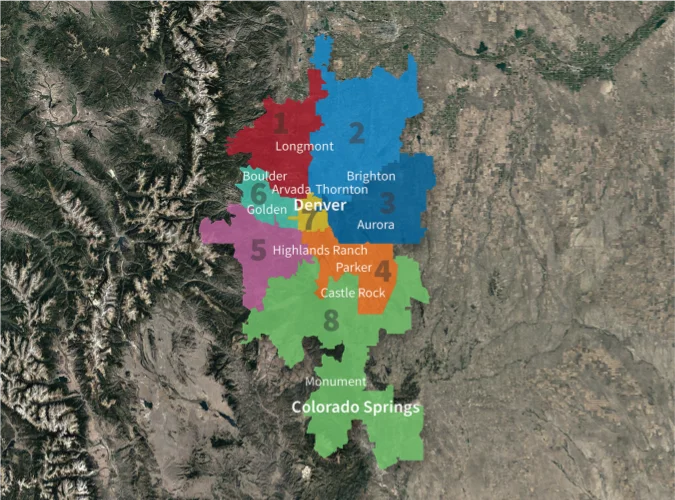
With a reach that extends from Longmont to Colorado Springs, our ability to connect homeowners with renovation and repair professionals is unrivaled.
We make it fast, easy, and free!