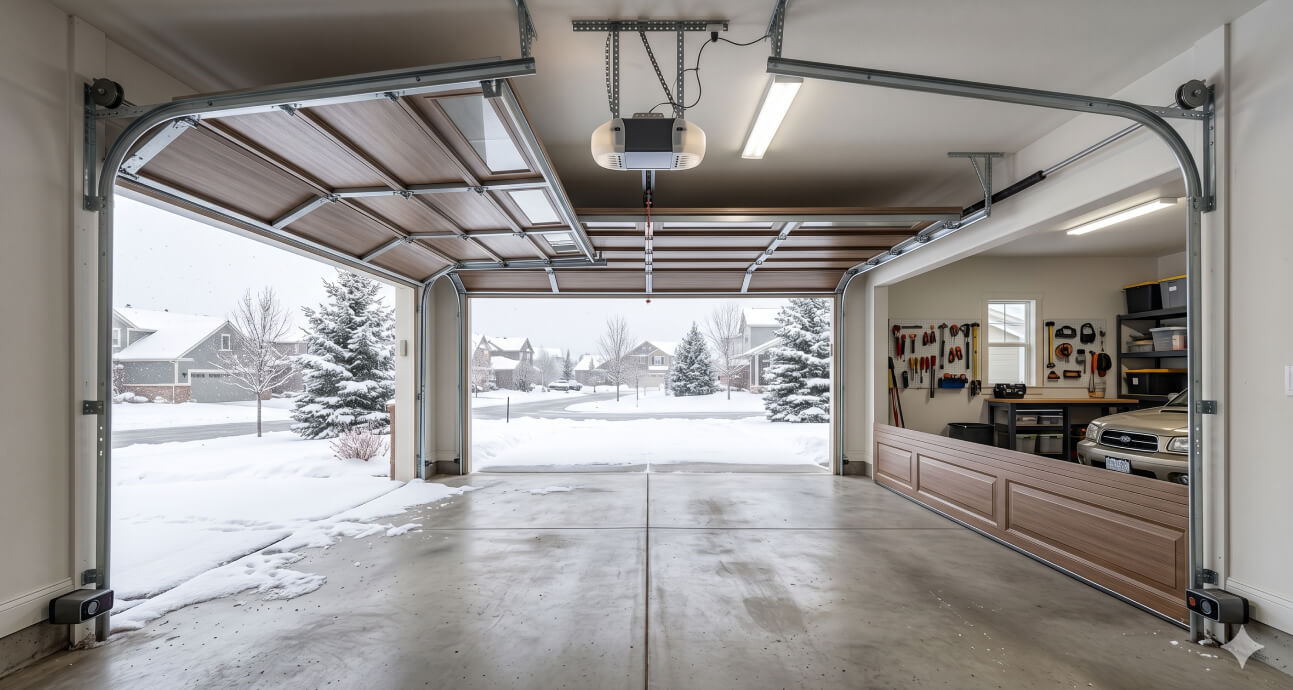
A garage door rarely quits without warning. More often, the change is small at first. The remote gets inconsistent. The door sounds rough on cold mornings. It closes halfway, then goes back up for no clear reason. In a lot of homes, people keep using it because it still works “well enough.” That is usually when wear starts spreading from one part of the system to another.
A quick check can help you tell whether the issue seems minor or whether it may involve the opener, sensors, or door balance. A remote issue is very different from a door that looks uneven, feels heavy, or strains as it moves, and that is usually the point where a professional should take a closer look.
Key Summary:
If your garage door is acting off, start by checking power, remote batteries, and sensor alignment. Notice how the door moves, because uneven or heavy movement often points to a bigger issue. When the problem goes beyond small checks, it is usually time to call a professional.

Start With These Quick Checks
The first thing to pay attention to is the sound. A grinding noise, a sudden pop, or a strained hum can each point to different issues. Timing matters too, whether the noise happens immediately or midway through the cycle. If you notice any of these sounds, it’s best to call a garage door repair company. These details can help them quickly narrow down the problem.
If you are not experiencing unusual garage door sounds and the door is acting up, here are a few basic things that are worth a look before you call a technician:
Take a quick look at the power.
The opener could not be receiving any electricity at all if nothing is reacting. Sometimes the problem is as easy as a loose plug or a tripped breaker.
Try the remote again with fresh batteries.
Weak batteries are often the first thing people check when the wall button works and the remote does not.
Look around the bottom of the opening.
Examine the area surrounding the opening's bottom. The door's movement may be hampered by leaves, dust, clutter, or even something kept a bit too close to the track.
Check the sensors near the floor.
If the door is partially obstructed, dusty, or nudged out of alignment, these tiny safety sensors can prevent it from closing correctly.
Reset the opener.
Think back to any recent power flicker. After a surge or outage, the opener can sometimes act strangely until it is reset.
Watch the door, not only the result.
A door that jerks, shudders, or moves unevenly is usually telling you something. That kind of motion tends to point to a problem that needs professional attention.
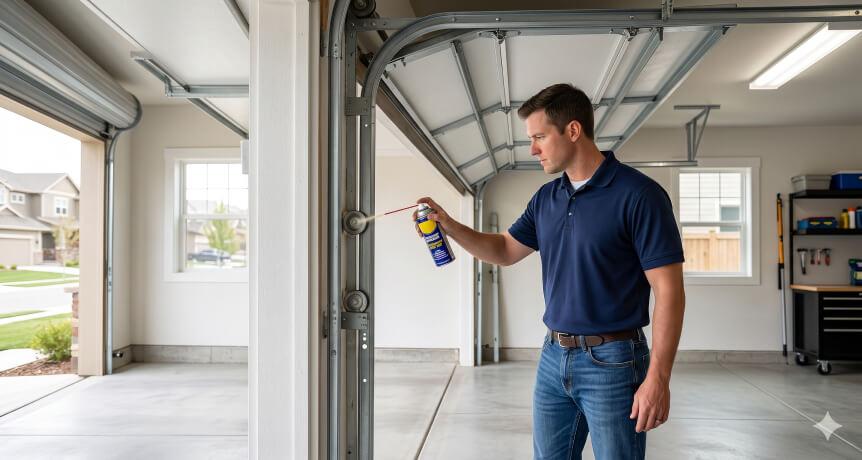
What Your Garage Door Problem May Be Telling You
Usually, the first clue is provided by the symptom. If the door won't open at all, there could be a power outage, an opener malfunction, a locked wall control, or a more significant mechanical issue.
If the wall button works and the remote does not, the problem may not be the door itself. A weak battery, lock mode, lost programming, signal interference, or a receiver issue can all cause that.
If the door starts closing and then reverses, the safety sensors are often involved. Dirt, misalignment, or a small object in the path may be enough to trigger it.
A rough or uneven-moving door may point to worn rollers, loose hardware, track issues, or balance trouble. And if the door suddenly feels heavy when operated manually, stop there and call a professional. That can be a sign of a spring problem.
Before You Call, Notice These Details
A few small details can make the conversation with a technician a lot more useful. Before you call, here are a few things worth noticing:
- Does the wall button work?
- Does the remote fail every time, or only sometimes?
- Does the door reverse at the same spot each time?
- Is one side hanging lower than the other?
- Did the problem start after a storm, outage, or cold spell?
- Can you hear the opener running while the door stays put?
Those clues can help a screened contractor narrow down whether the issue may be with the opener, the sensors, the balance, or another part of the system.
Problems That Need Professional Repair Right Away
Some garage door issues are not “wait and see” problems.
Here are some of the biggest red flags:
- Broken spring. This affects how the entire door lifts and balances.
- Frayed cable. That can lead to uneven movement or sudden failure.
- Bent track. A damaged track can throw the whole system off.
- Door off track. Once that happens, continued use can make the situation worse.
- Door hanging crooked. That often means something in the lifting system is no longer working correctly.
- Door slamming shut or not staying in place. This usually points to a balance issue that needs professional repair.
If you are seeing those signs, it makes sense to contact garage door repair and replacement contractors rather than trying to manage the issue on your own.
When the Problem May Be the Opener, Not the Door
Sometimes the garage door itself is not the main problem. The opener may be where the trouble starts.
You may hear the motor running while the door barely moves. The remote does not function, and the wall button might. The opener light may flash for no apparent reason, or the keypad might stop to function. Those small details matter because they help separate an opener issue from a door hardware issue.
If that sounds familiar, it may help to look into garage door openers and have a trained professional inspect the full system.

Colorado Weather Can Make Garage Door Problems Worse
Colorado weather has a way of bringing small garage door issues to the surface. A door that felt mostly fine last month may start acting different on a cold morning. Sometimes that is when a slightly unbalanced door becomes more obvious, not because winter created the problem from scratch, rather because the colder conditions made an existing weak spot harder to ignore.
Dust is another one people miss. Around here, fine buildup near the sensor area can lead to inconsistent closing behavior, not only a full failure. The door may close normally three times, then reverse on the fourth. That kind of stop and start issue can be frustrating because it feels random when it really is not.
You also see this in garages that get used like the main front door. During colder stretches, repeated up and down cycles can put extra strain on the opener before the rest of the system fully gives out.
And worn bottom seals often show up in quieter ways first, dirt blowing in, a strip of cold air near the floor, a little moisture after weather moves through. A lot of homeowners do not think of that as a garage door problem at first; however, it often is.
When Repair Makes Sense, and When Replacement May Be Smarter
Some garage door problems are isolated. Others are a sign that the full system is wearing out. That is why this decision usually comes down to condition, not guesswork.
When Repair May Be Enough
If the issue is limited and the rest of the system is in solid shape, repair may still make sense.
- A sensor issue
- Minor hardware wear
- One damaged component
- A specific opener problem without broader door damage
When Replacement May Be the Better Move
Sometimes repeated problems start stacking up. At that point, replacement may be the more practical path.
- Major panel damage
- Repeated breakdowns
- An aging system with multiple worn parts
- Poor sealing or operation that continues to decline
Instead of continuing to fix one problem after another, it could be time to consider garage door installation if the entire system is beginning to show signs of aging.
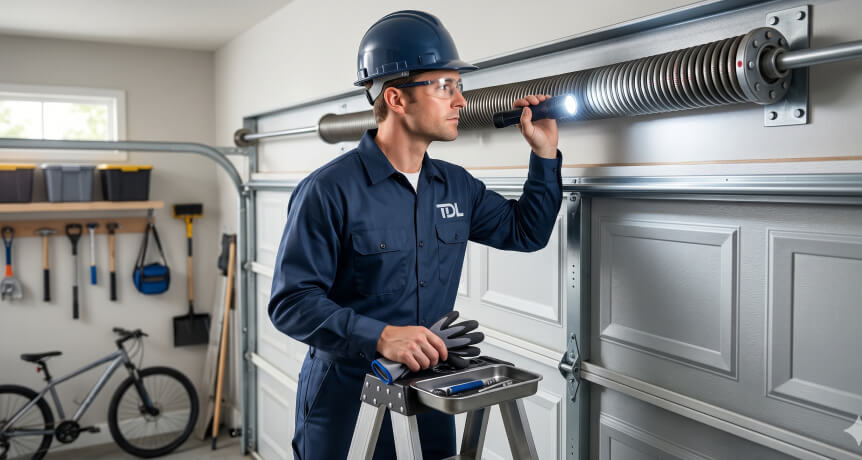
How to Choose the Right Garage Door Company
The hiring decision matters more than many homeowners expect. A reputable business can assist you in determining whether the issue is minor, mechanical, related to the opener, or a component of a larger system problem.
Here are a few things worth looking for:
- Screened contractors. That gives you a stronger starting point than picking a company at random.
- Experience with the full system. Garage doors, tracks, springs, and openers all work together, so the diagnosis should look at the whole setup.
- Clear communication. A good contractor should explain what they found in plain language, not bury you in vague terms.
- Willingness to compare options. If repair and replacement are both possible, you should hear both sides clearly.
- Multiple bids. It is smart to contractors, especially if the issue may involve major work.
If you are starting that process, Team Dave Logan can help you connect with garage door companies that serve Colorado homeowners.
Final Words
The majority of garage door calls don't begin with a complete failure. Usually, it's something minor that keeps happening, like a door that hesitates, a remote that suddenly becomes unreliable, a delayed shut, or a scratchy sound.
Those patterns are easy to live with for a while; however, they can tell you a lot about whether the issue looks minor or whether the system needs a closer look from a professional. If your garage door has been acting differently lately, this is a good time to stop guessing and have it checked by someone who works on these systems every day.
Team Dave Logan can help you find screened local pros who serve Colorado homeowners and know what to look for when a garage door starts showing early signs of trouble.



