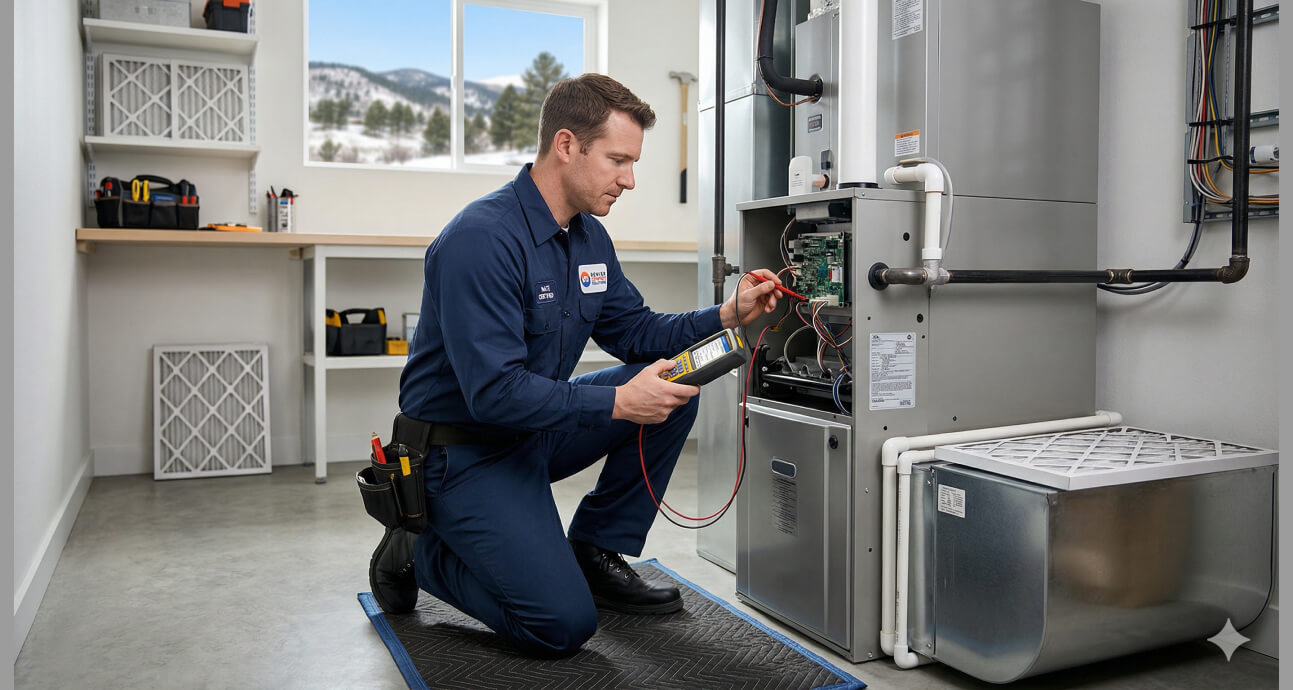
You usually feel heating trouble before you can explain it. The house is warm or cold, but not really comfortable. One room feels fine, another feels chilly, and the furnace seems to be working overtime for no good reason.
We see homeowners notice these little shifts first, long before anything fully stops working. In Denver, that matters. Cold snaps or heat waves have a way of exposing problems that are easy to ignore in milder weather.
If your home has been acting a little off lately, these are the signs worth paying attention to.
Key Summary:
If your Denver home has uneven heating or cooling, longer run times, rising energy bills, strange noises, dry or dusty air, repeat service issues, or an older system that no longer feels reliable, it may be time for a closer look. Some of these signs can point to routine HVAC service, while others may suggest a repair or a bigger system problem.

1. Your Home Has Uneven Heating From Room to Room
Uneven heating or cooling is often one of the first things homeowners notice. The living room may feel fine, but a bedroom, basement, or upstairs space stays colder than the rest of the house.
That can point to airflow issues, duct problems, insulation gaps, or a system that is not distributing warm air well. In Denver, it often shows up more in older homes and additions. It does not always mean replacement, but it is a good reason to have a screened professional look at the full setup.
2. Your HVAC System Is Running More Often Than Usual
You do not have to know HVAC systems inside and out to spot this. Most people can tell when the system starts behaving differently. The furnace or AC stays on longer, kicks back on sooner, or keeps running without making the house feel much warmer or cooler.
Sometimes that points to a service issue. Other times, it can mean the system is losing efficiency and working harder to keep up, especially during colder or heat-intensive Denver weather. That is why this sign matters. A unit can still run every day and still not be doing its job well.
If the temperature feels like it is always trying to catch up, that is a good time to bring in a screened professional. They can figure out whether the problem looks more like routine service, a repair issue, or a bigger system concern.
3. Your Energy Bills Have Increased Without a Clear Reason
When bills start creeping up, many homeowners blame the weather first. And sure, colder stretches or very hot weather can raise usage. But if the increase feels out of step with what you would expect, your heating or AC system may be part of the problem.
We have seen this happen when a system is losing efficiency quietly. Nothing dramatic, nothing obvious, it simply runs longer and uses more energy to do what it used to do with less effort. That is one of those signs people brush off for a while because the house is still getting warm or cool enough. It is still worth having checked.
4. Your Furnace or HVAC System Is Making Unusual Noises
Every heating or AC system makes some noise. That part is normal. What gets attention is a new sound, or the same sound happening over and over.
A few examples that may be worth asking about:
- Banging when the system starts or stops
- Rattling that keeps showing up
- Squealing or screeching
- Buzzing that sounds sharper than usual
- Repeated popping
- Whistling that may point to airflow trouble
One random noise is not always a crisis. The pattern is different. If the system starts sounding rough, loose, or strained, it is smart to have a screened contractor inspect it before the problem grows teeth.
5. Your Home Feels Dry, Dusty, or Less Comfortable Than Usual
Not every HVAC issue looks like a temperature issue. Sometimes the house is technically warm or cool, but it still feels off. Maybe the air feels dry enough to notice right away. Maybe dust seems to show up faster. Maybe the rooms feel stuffy, stale, or harder to get comfortable in.
Denver’s dry air can make that more obvious. We hear homeowners mention static, irritated skin, or that “winter house” feeling where the heat is on but the place still feels harsh. Those details may sound small, but they can help a contractor spot problems with airflow, filtration, or overall system performance.
6. Your System Needs Frequent Repairs or Service Calls
One repair does not say much. Two or three within a short span starts to tell a story.
If your heating or AC system keeps needing service, especially during the same season, it may be moving out of the occasional maintenance stage and into something less reliable. Maybe the same issue comes back. Maybe different parts keep needing attention. Maybe each winter or summer comes with another unexpected call.
Some patterns that tend to matter are:
- The same problem keeps resurfacing
- Multiple repairs happen within a short period
- The system seems to struggle more during very cold or very hot weather
- Service calls are becoming a regular part of winter or summer
- Reliability has dropped, even when repairs are made
This is usually the point where homeowners start asking the right question: Does it still make sense to keep fixing it? A screened professional can help you sort that out. And if someone recommends major work, it is wise to get three bids from screened contractors so you can compare recommendations with a clear head.
7. Your HVAC System Is Older and Not Performing Like It Used To
Older HVAC systems do not always fail in a dramatic way. More often, they slowly lose their edge. The house takes longer to warm up or cool down. Cold mornings or very hot afternoons feel tougher on the system and rooms do not stay as steady as they once did.
We hear a version of this all the time: it still runs, but it does not feel right anymore. That is usually the clearest description. When a system is older and several other warning signs are starting to show up too, it makes sense to have it evaluated.
Sometimes the answer is service and sometimes it is repair. Sometimes the equipment is simply nearing the point where replacement becomes the more realistic option.
How Denver’s Climate Can Affect HVAC System Performance
Denver weather does not exactly go easy on HVAC equipment. Long cold stretches and hot summer days can push a struggling system harder. Fast temperature swings can expose issues that were hiding in plain sight. A unit that seemed mostly fine in milder weather can suddenly look a lot different once winter settles in.
Then there is the dry air. Homes here can feel uncomfortable in ways that are not always tied to temperature alone. Poor airflow, uneven heating or cooling, and indoor dryness can all pile onto the same experience, which is why homeowners sometimes say, “The system is on, but the house still does not feel right.”
Older homes add another wrinkle. Drafts, aging ductwork, insulation weak spots, and additions built at different times can all affect how the system performs. Sometimes the equipment is the issue. Sometimes the home is making that equipment work much harder than it should.
What to Ask an HVAC Contractor During an Inspection
A good inspection should answer real questions, not leave you with a vague shrug and a sales pitch.
- What do you think is causing the issue?
- Does this look more like service, repair, or replacement?
- Are there airflow or duct problems affecting performance?
- Is the system heating or cooling the house evenly?
- Are any parts showing wear that may lead to more trouble?
- How is the system performing for its age?
- Would you recommend getting additional bids from other screened contractors?
- Are there issues in the home, like insulation or thermostat placement, that may be adding to the problem?
When Your HVAC System Starts Acting Up, Get It Checked
HVAC problems often start small. A colder or warmer room, a louder furnace or AC unit, or a system that seems to run a little too long can be easy to shrug off for a while. We see that all the time, especially when the system is still technically working.
If any of these signs sound familiar, it may be time to schedule an inspection with a screened HVAC contractor through Team Dave Logan. In Denver, small heating or cooling issues can become a lot more noticeable once very cold or hot weather settles in.

FAQs
How do I know if I need HVAC service or a new heating or AC system?
If the issue seems limited and the system is still heating or cooling the home fairly well, service may be enough. If the system is older, less dependable, or showing several warning signs at once, it is worth asking whether replacement should also be considered.
Why is my house heating or cooling unevenly in Denver?
Airflow issues, duct leaks, insulation variations, thermostat placement, or a HVAC system that is having trouble distributing heated or cooled air can all result in uneven comfort. These comfort gaps are typically more noticeable in Denver due to the city's cold climate and dry air.
What noises from a furnace or HVAC system are cause for concern?
Banging, rattling, squealing, buzzing, or repeated whistling are all sounds worth having checked. One odd sound may not mean much, but a new pattern usually deserves a closer look from a screened professional. Many HVAC companies also offer maintenance programs, and those routine checkups can help catch small issues before they turn into bigger repair problems.
How often should a home HVAC system be inspected?
A HVAC inspection is often scheduled by homeowners once a year, usually before colder or hotter weather arrives. This allows a contractor to identify wear, airflow concerns, or performance issues prior to the system operating at maximum capacity.



