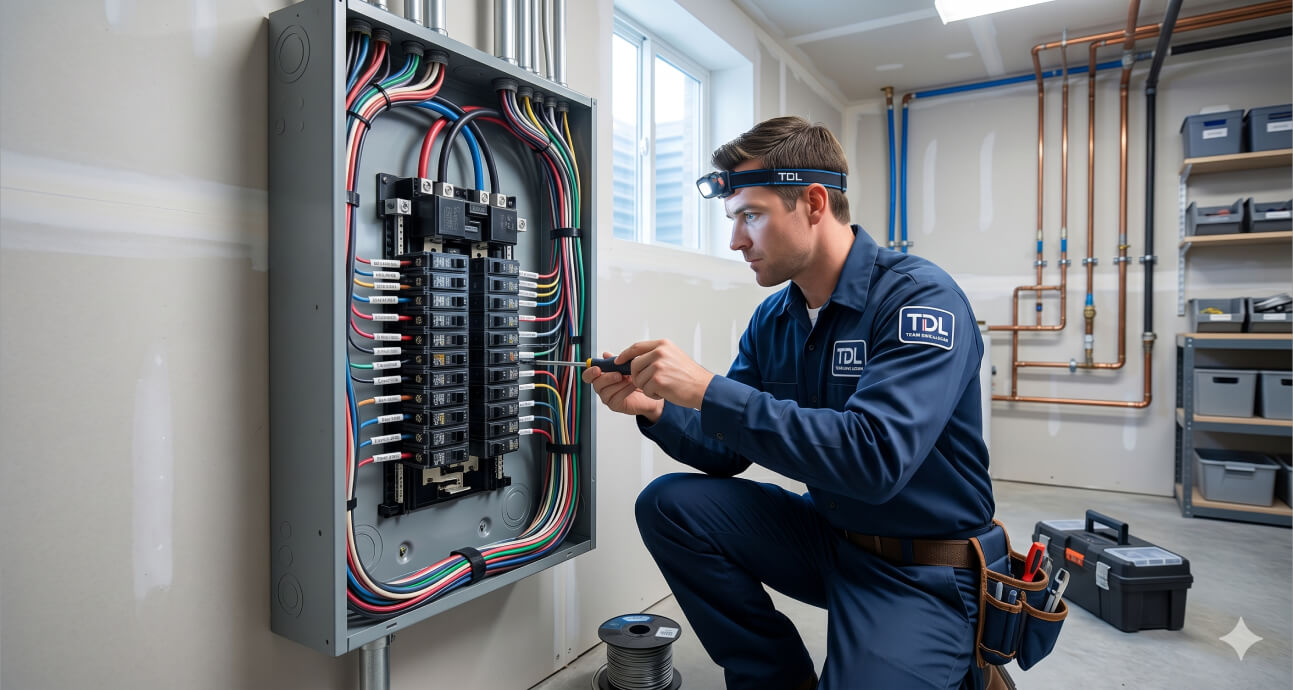
There is a point where a house starts asking for more than its electrical system was built to give. In Denver, you see that in all kinds of places, a bungalow in Wash Park, an older place in Park Hill, a brick home in Congress Park, a remodel in Berkeley.
The owner wants cleaner lighting, an EV charger in the garage, energy-efficient HVAC, a few smart upgrades, maybe solar panels later. None of that sounds extreme on its own.
Put it together, though, and the electrical panel becomes part of the story fast. Good electrical planning is not only about fixing a problem after the breaker trips. It is about looking at the house as it is wired now, then making sure the next upgrade does not constrain your lifestyle.
Key Summary:
Many Denver homes, especially older ones, may need electrical planning before adding EV chargers, smart home upgrades, newer HVAC, or future solar. A licensed electrician can check electrical panel capacity, spot safety concerns, and help you plan upgrades in the right order before small issues turn into bigger ones.

Why Electrical Upgrades Matter More Today
Homes run differently now. That is the simple version. More things stay plugged in, more systems run at the same time, and many homeowners want the house ready for what comes next, not stuck playing catch-up project by project.
That lands differently in older Denver homes than it does in a newer suburb built around modern electrical loads. In older central neighborhoods, a lot of homes were built in a very different era. They were not designed with EV charging, smart switches in every room, upgraded kitchens, home offices, and electric-heavy mechanical systems in mind.
A few patterns come up again and again:
Older panels run out of breathing room.
The house may still function, but once you start adding new demand, the limits show up quickly.
Capacity affects more than safety.
It can shape convenience, future upgrades, and how messy or smooth the next project becomes.
One upgrade tends to pull in another.
A new appliance, a garage improvement, or a switch to newer HVAC can turn into an electrical conversation before long.
Thinking ahead can save a second round of work.
A good electrician is not only looking at the job in front of them. They are also reading where the house is headed.
Signs Your Panel May Need Attention
Sometimes the house gives you a clear warning. Other times, it nudges you a few times before the pattern becomes hard to ignore.
Here are some signs it may be time to bring in a licensed electrician for a closer look:
Lights flicker or dip.
If the lights blink when the microwave runs, the AC starts, or another large appliance kicks on, the system may be feeling the load.
Breakers trip more than they should.
A breaker tripping once in a while is not the same as one circuit becoming the problem child of the house.
Power strips are doing too much work.
When one room depends on extension cords and outlet splitters to function, that is not a great or safe long-term setup.
The panel is packed.
No open space means less flexibility. That becomes a problem when the next upgrade shows up.
Something smells off, sounds off, or feels warm.
Buzzing, heat, or a burnt smell is not a “keep an eye on it” situation. It is a “call a professional” situation.
The home has changed, but the electrical system never caught up.
Finished basements, garage updates, bigger appliances, and home office setups can add load quietly over time.
Planning for EV Chargers
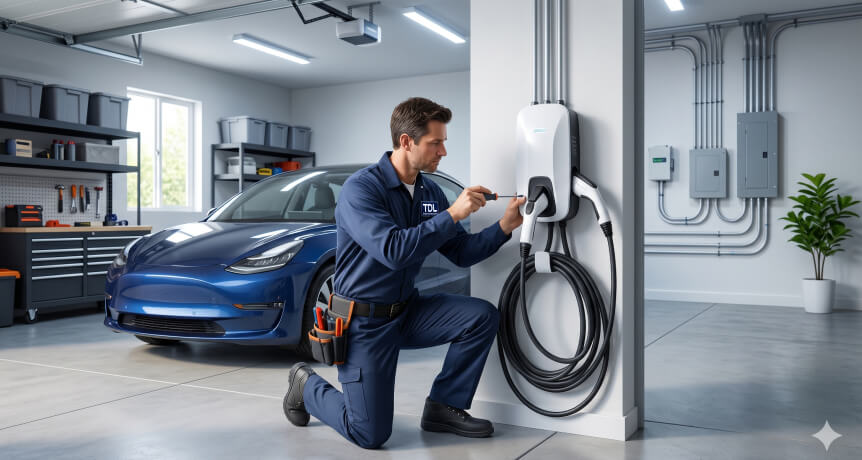
EV chargers are where a lot of homeowners first see the limits of the system. Installing the charger may sound straightforward, but the bigger question is what the panel can handle once that load joins everything else in the house.
In many older Denver neighborhoods, the real issue is not the charger itself. It is panel capacity. That comes up in homes with older equipment, full panels, or detached garages off the alley, where the wiring path can shape the whole job.
A licensed electrician can run load calculations, review the panel, and help you plan for what may be next, especially if another EV, battery storage, or more electrification is on the horizon
How Smart Tech Changes Electrical Demand
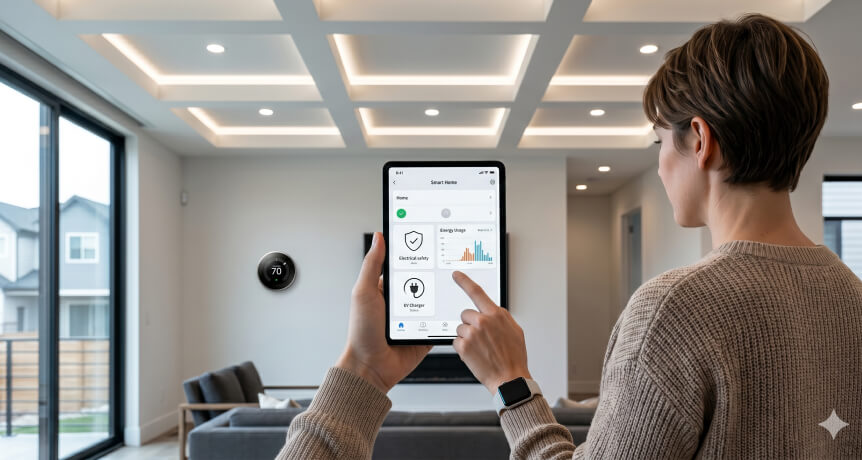
Smart home upgrades do not always look heavy on paper. The load builds quietly.
More connected devices, more background demand
A thermostat, cameras, smart locks, lighting controls, garage systems, and connected appliances may not sound like much one by one. Together, they start adding up, especially in a house that was never laid out for that kind of use.
Reliable power matters more when everything connects
Smart tech feels great when the system behind it is steady. When the electrical side is strained, the convenience starts wearing thin. A setup that works on and off is not much of an upgrade.
Surge protection starts making more sense
Homes with more electronics have more to protect. In Denver, that can become part of a wider planning conversation, especially when people are already thinking about panel work, future solar, or backup power.
Future-ready wiring can save headaches later
A lot of homeowners do these upgrades in stages. Nobody wakes up one morning and does the panel, charger, cameras, lighting, and battery system all at once. A cleaner electrical plan makes those next steps easier.
The Risks of Delaying Needed Upgrades
Electrical issues have a way of hanging around quietly, right up until something new gets added and the weak spot shows itself.
Here are a few reasons it makes sense to deal with needed upgrades sooner rather than later:
- Overloaded circuits can keep getting pushed. More demand does not solve an already strained setup. It can make it more unstable.
- Older components can become the real bottleneck. The new charger or appliance gets the attention, but the aging panel or outdated wiring may be the part holding the project back.
- Small symptoms can turn into bigger repairs. A flicker here and a tripped breaker there may not stay small once the house keeps leaning on the same weak points.
- Fire and shock risks are not worth brushing aside. Warm outlets, buzzing, and odd smells need a licensed electrician, not guesswork.
- New tech can expose old limits fast. What felt “fine” last year may not hold up once the home asks more from it.
Why Electrical Work Often Connects to Other Home Projects
Electrical work has a way of showing up alongside something else. A remodel adds new appliances, a garage project brings charger planning into the mix, or an HVAC upgrade pushes the panel back into the conversation.
That bigger view matters in Denver. Older homes in places like Baker, City Park, and West Highland can have tighter electrical limits than people expect.
And if solar, battery storage, or exterior upgrades are part of the plan, electrical work may overlap with roofing contractors, heating and air conditioning, or other screened home pros. Coordinating the work can help reduce delays and avoid rework.
The same planning matters outside the house. Hot tubs, patio heaters, and holiday or landscape lighting can add more demand than many homeowners expect. Older Denver homes may need panel or circuit upgrades before those features are added. Newer homes can run into limits too, especially with EV charging or upgraded HVAC already in the mix. A licensed electrician can review the setup and plan the right circuits before installation
How to Choose the Right Contractor
The right electrician is not only there to install something. They should be able to read the house, spot the pinch points, and explain what makes sense now and what may matter later.
A few things are worth looking for:
- Hire state-licensed professionals. Electrical work needs real training, proper permitting, and a clear understanding of code.
- Look for someone who asks about future plans. The charger, the remodel, the smart upgrades, the solar idea in the back of your mind, all of that matters.
- Pay attention to how they explain the work. Clear scope matters. If you cannot get a straight explanation, that is useful information.
- Get multiple bids. Comparing contractors can help you see differences in scope, not only differences in price.
- Ask about permits and inspections. A proper Denver electrical project should include the permit and inspection side, not only the install.
Sorting that out can be harder than it sounds. A company can look polished online and still leave you guessing. That is where Team Dave Logan can help.
Our directory gives Denver homeowners a place to find screened local pros, including electrical contractors and other home service providers, like roofing repair companies that may tie into the job. It is a solid starting point if you want to compare bids, review the scope of work, and move forward with more confidence.

Conclusion
A lot of Denver homes are in that middle ground right now. They still work, but they are being asked to handle more than they were built for years ago. That is why panel upgrades, EV chargers, smart tech, and future electrical planning tend to belong in the same conversation.
Taking a whole-home view can help you plan more clearly and avoid patchwork decisions later. The pros listed on Team Dave Logan are screened, which can make the search easier when you are comparing local professionals.
It still makes sense to get multiple bids so you can compare scope and recommendations side by side. If your home is showing signs of strain, or you are planning ahead, explore our directory and connect with experienced local pros.



